Sunday, February 17, 2019
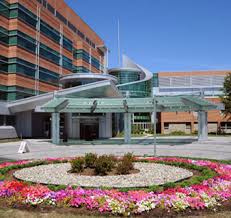
Jersey Shore University Medical Center Offers Collaborative Care
A hematologist and an oncologist at Regional Cancer Care Associates, LLC, in New Jersey, Kenneth D. Nahum, DO, has received New Jersey Monthly Magazine’s Top Doctors award four times. Frequently offering his support to health-related charities, Dr. Kenneth D. Nahum served for six years as a co-chair of the Sweetheart Ball fundraiser benefiting the cancer program at Jersey Shore University Medical Center.
Jersey Shore cancer treatment is built around a collaborative care model. Each patient is assigned a comprehensive care team that includes a radiation oncologist, medical oncologist, radiation therapist, diagnosing and treating surgeon, and primary care physician. For patients with aggressive cancers who may benefit from emerging treatments, Jersey Shore participates in clinical trials run by The Cancer Institute of New Jersey and the Radiation Therapy Oncology Group.
The Center also features a unique patient-centered program known as Nurse Navigation, where registered nurses provide patients with logistical and emotional support throughout the treatment process, including with social service and insurance paperwork. Aside from cancer treatments, Jersey Shore offers patients rehabilitation services, nutrition counseling, support groups, and genetic testing to support whole patient care from initial testing through recovery.
Sunday, February 3, 2019
Possible Causes of Neuroblastoma
New Jersey-based physician Kenneth D. Nahum, DO, practices as a hematologist and an oncologist at Regional Cancer Care Associates, LLC, in Howell. With more than three decades of experience in the field, Dr. Kenneth D. Nahum has cared for thousands of patients with various cancers and blood disorders.
Although cancer is most often thought of as an adult condition, it can occur in infants and children, as is the case with neuroblastomas. The most common type of cancer affecting infants, this rare form of cancer is normally found in children aged 5 or younger. It occurs when a solid tumor grows from immature nerve cells, or neuroblasts, in the body.
As a fetus develops, its neuroblasts should turn into nerve cells, fibers, and other cells that make up the adrenal glands. In most cases, the neuroblasts mature by the time a fetus is born, but they can occasionally mature after birth, as well. These immature cells will continue to mature after birth; however, sometimes they start growing uncontrollably and form a tumor, or neuroblastoma, instead.
Scientists aren’t sure exactly what causes the neuroblasts to become cancerous in some patients, though they have linked the condition to genetics. DNA changes that turn on oncogenes, which help cells grow and divide, increase the risk of neuroblastomas. The same is true of changes that turn off tumor suppressor genes that are responsible for controlling cell death.
Specific chromosome changes, including mutations to the ALK oncogene and PHOX2B gene, the latter of which helps nerve cells mature, have also been linked to the development of neuroblastomas. These specific changes are inherited by parents. Oncogene and tumor suppressor gene changes may also be inherited by parents, but some patients do experience these changes naturally over time.
Despite the genetic link, and the fact that infants have a higher chance of developing neuroblastoma if there is a family history of the condition, most neuroblastomas form spontaneously.
Although cancer is most often thought of as an adult condition, it can occur in infants and children, as is the case with neuroblastomas. The most common type of cancer affecting infants, this rare form of cancer is normally found in children aged 5 or younger. It occurs when a solid tumor grows from immature nerve cells, or neuroblasts, in the body.
As a fetus develops, its neuroblasts should turn into nerve cells, fibers, and other cells that make up the adrenal glands. In most cases, the neuroblasts mature by the time a fetus is born, but they can occasionally mature after birth, as well. These immature cells will continue to mature after birth; however, sometimes they start growing uncontrollably and form a tumor, or neuroblastoma, instead.
Scientists aren’t sure exactly what causes the neuroblasts to become cancerous in some patients, though they have linked the condition to genetics. DNA changes that turn on oncogenes, which help cells grow and divide, increase the risk of neuroblastomas. The same is true of changes that turn off tumor suppressor genes that are responsible for controlling cell death.
Specific chromosome changes, including mutations to the ALK oncogene and PHOX2B gene, the latter of which helps nerve cells mature, have also been linked to the development of neuroblastomas. These specific changes are inherited by parents. Oncogene and tumor suppressor gene changes may also be inherited by parents, but some patients do experience these changes naturally over time.
Despite the genetic link, and the fact that infants have a higher chance of developing neuroblastoma if there is a family history of the condition, most neuroblastomas form spontaneously.
Tuesday, January 22, 2019
Medical Journal Reports Possible New Treatment for Cold Agglutinin
Responsible for treating thousands of hematology and oncology patients over the past 30 years, Kenneth D. Nahum, DO, works at Regional Cancer Care Associates, LLC, in Howell, New Jersey. Active in his professional community, Dr. Kenneth D. Nahum maintains membership with the American Society of Hematology (ASH).
ASH’s medical journal, Blood, recently reported exciting news about the effort to develop a treatment for cold agglutinin disease, a rare blood disorder with no approved treatment at present. Affecting about 10,000 people in the United States and Europe, cold agglutinin is an immune system malfunction that mistakenly causes antibodies to target and destroy red blood cells faster than the bone marrow can replace them.
As reported in Blood, the first clinical trial with 10 humans showed the investigational drug sutimlimab may be an effective treatment for cold agglutinin disease. Sutimlimab, which is a specific C1s inhibitor, showed the ability to prevent red blood cell destruction and increase hemoglobin levels in seven of the 10 patients. The patients who responded well to the new drug therapy no longer had the need for transfusions.
Wednesday, January 16, 2019
Study Finds Link between Persistent VMS and Breast Cancer Risk
New Jersey-based oncologist and hematologist Kenneth D. Nahum, MD, treats patients with blood disorders and cancers at Regional Cancer Care Associates (RCCA). With more than 30 years of medical and clinical research experience, Dr. Kenneth D. Nahum has treated many instances of breast cancer.
A recent study published in the journal of the North American Menopause Society (NAMS), revealed a link between breast cancer and vasomotor symptoms (VMS). Researchers looked at more than 25,000 women over the course of nearly 18 years.
In this period, 1,399 cases of new breast cancer were diagnosed among participants. Many of the women with breast cancer had experienced persistent VMS symptoms, such as night sweats and hot flashes, that lasted for at least 10 years. Breast cancer rates were lower among women who had not experienced persistent VMS.
Researchers also looked at the survival rates of women with and without persistent VMS after they were diagnosed with breast cancer. While a small difference was seen, it was not statistically significant, which suggests that persistent VMS did not affect survival rates of women with breast cancer.
Subscribe to:
Posts (Atom)


